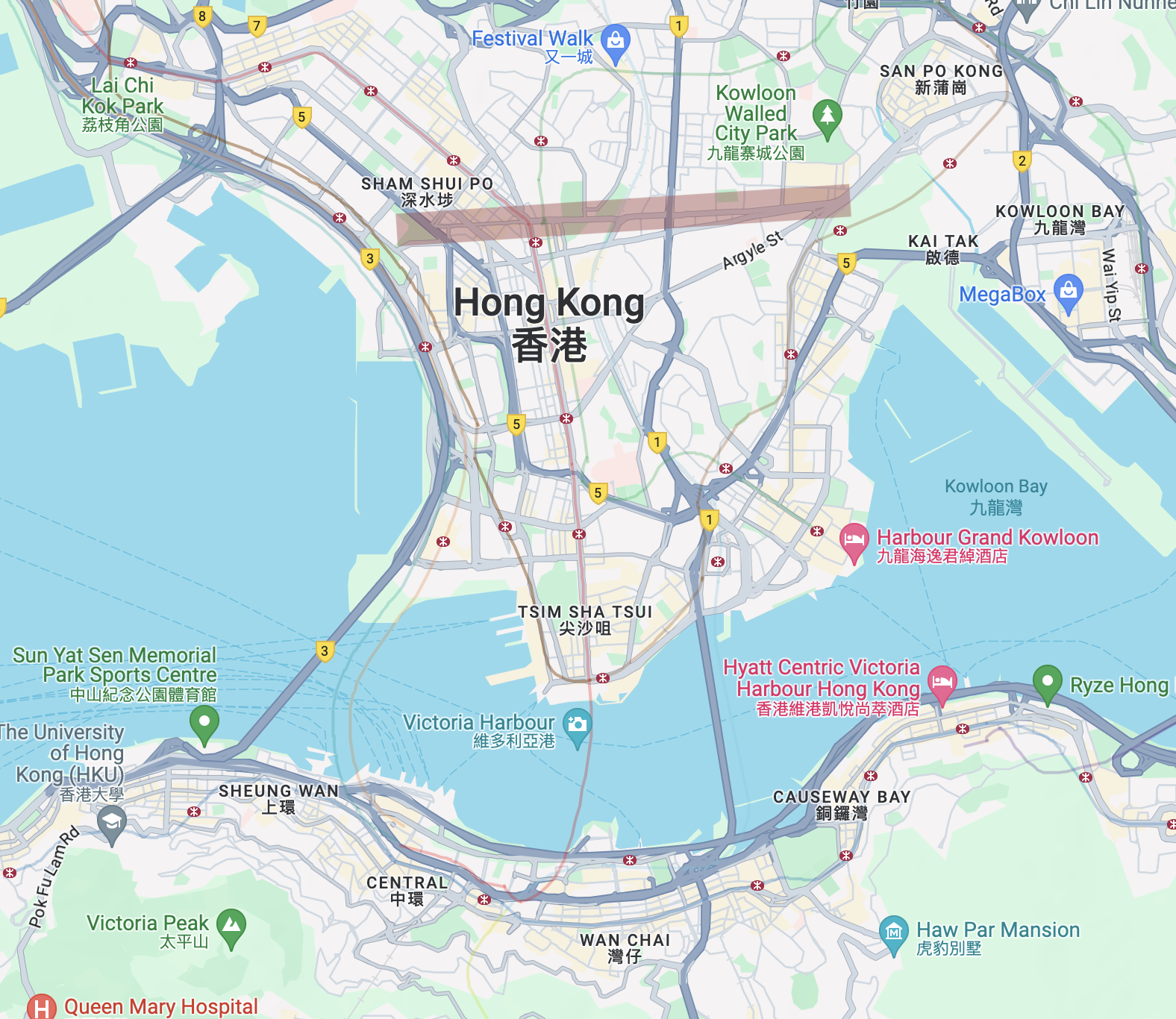

Hong Kong already seems like a fictional place. 'What if the British ran a Chinese city for 150 years and then gave it back?' seems like a fanciful question, and yet Hong Kong is as real as the city you find youself in. But what if I told you there was a place within Hong Kong that sounds even more fictional? What if I told you there was a place that had no laws. No building codes, no health standards, no proper water or sewage, no police, and what if I told you that more than 35,000 people lived there? And that it was on area roughly the size of a sports stadium (not including the parking lot!) (about 200m x 100m)? Seriously, try to imagine 35,000 living, not just attending, but living in your nearest sports stadium.
In the section on the history of Hong Kong I said that in the Second Convention of Peking, sign in 1898, the British leased the "New Territories" from the Chinese. That's mostly true, except for one tiny part of the New Territories known as Kowloon Walled City (KWC).
KWC was a Chinese fort (that's where the "Walled" part of the name comes from, there used to be a wall). It was located just above Boundary Street (highlighted in red) in the area that is today Kowloon Walled City Park (sorry, spoilers, it's a park now). The image on the right is from 1915 and it labels KWC as "Chinese Town." You can see that it was initially on the water.
In this "Second Convention" the Chinese were to retain sovereignty over KWC, but on 14 April 1899, only 10 months after signing the convention, the British attacked the walled city and basically expelled the Chinese garrison. Sources say that not much happened over the next few decades. Various squatters started living there, and in the 1930's the British tried to evict the squatters and demolish it, but the Nationalist Government of China, despite being busy with wars, protested, asserting its sovereignty over the walled city and the British backed down.
During WWII, the Japanese occupied Hong Kong and tore down the wall for building material to expand the nearby Kai Tai airport
In late 1947/early 1948 the British again tried to evict the squatters in KWC and tear it down, but again the Chinese protested and even burned down the British consulate in Canton (Guangzhou)
So now you get an idea of how such a place came to be. The Chinese, despite officially having sovereignty over KWC, basically didn't enforce their own laws there, mostly because they had other problems, and yet they also refused to let the British adminster it, and so as people settled there it became this no mans land, at least in the eyes of the law.
As the cultural revolution occurred in China, a lot of refugees came into British Hong Kong, and settled in Kowloon Walled City. Some of them were doctors or dentists, but because they couldn't practice their craft legally in HK, the set up shop in KWC in an "unofficial" capacity.
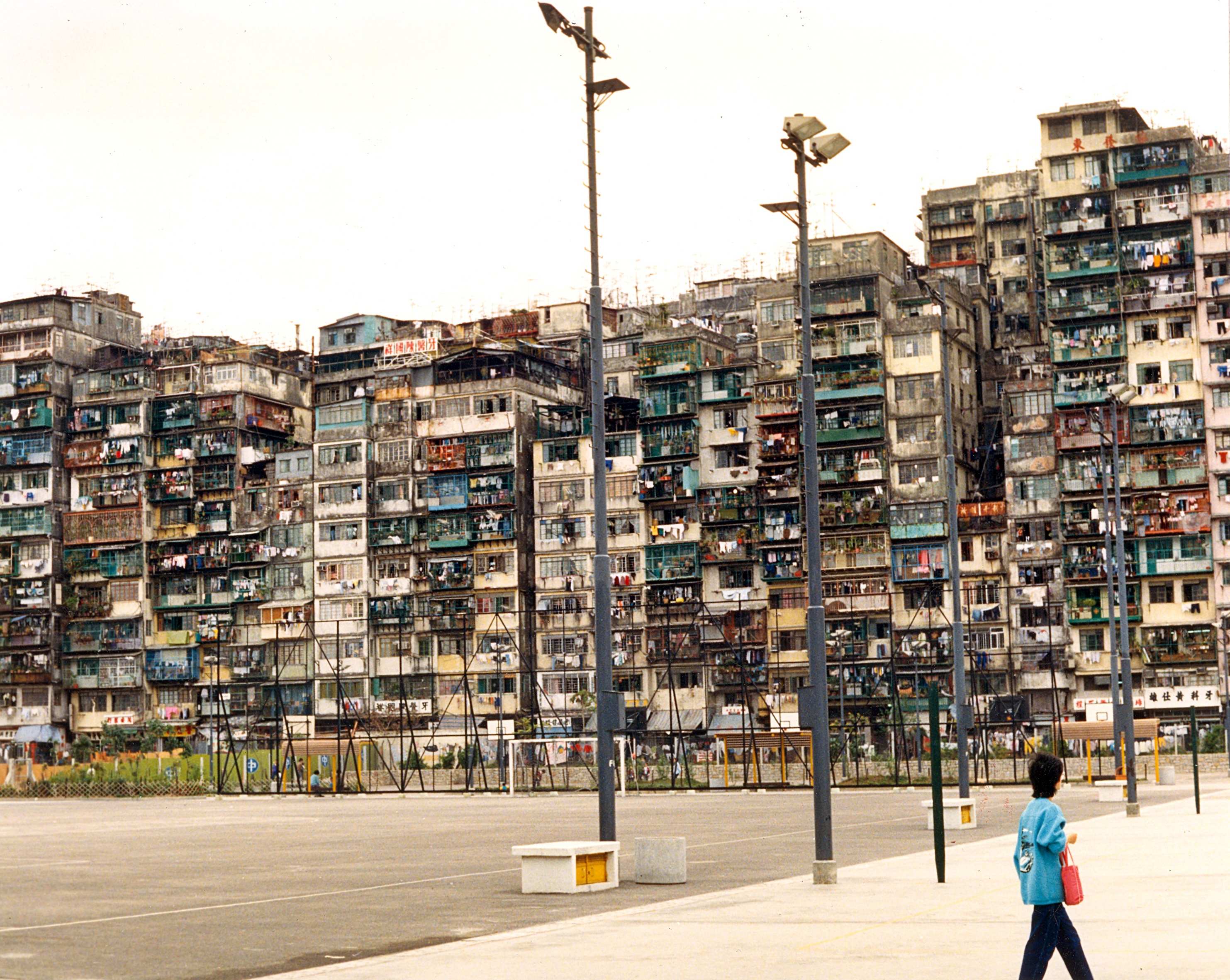
As more and more people settled there, the city grew. People built homes on top of homes. Eventually they stopped building at about 12-14 stories because authorities insisted on one building code: don't build so high that you interfere with planes flying into Kai Tak airport!
Eventually, the city came to look like this:

As Britain prepared to hand Hong Kong back to the Chinese, the subject of KWC came up. This time the British would succeed in evicting the residents and demolishing the city, as the Chinese government no longer protested against this. In order to survey the city so that proper compensation could be distrubted, the British undertook a census. They were concerned about people fleeing if officials showed up asking for names and addresses, so one day the police cordoned off the city as census officials went inside to do their work.
To make a long story short, the city was demolished and a park was built in its place, a park which commemorates the former walled city

When I started writing this section, I thought I made more photos of the park, but it turns out I only had a few and they weren't very good, so instead I'll leave you with this photo from wikipedia and some final thoughts.

Much has been written about KWC. It's such a strange place and I've only scratched the surface here. Like I said at the beginning, it sounds fictional, and yet it was absolutely real. It simultaneously raises and answers so many questions about human nature, I'm sure people will be talking about it for a long time to come.